
The Hidden Costs of Buying a Home in Houston: What Buyers Forget to Budget For
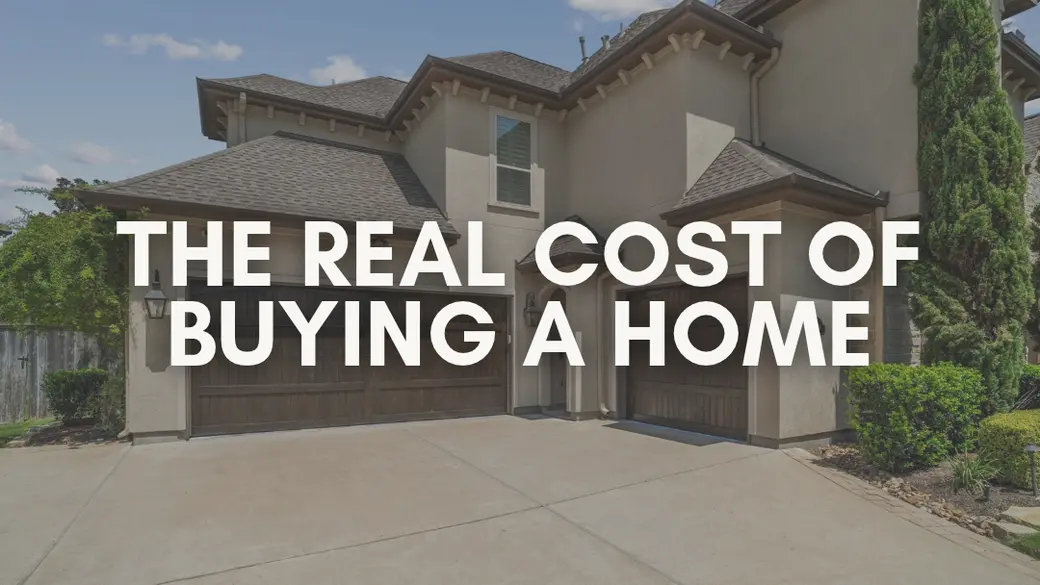
The Hidden Costs of Buying a Home in Houston: What Buyers Forget to Budget For
Written by Kristi Newcomb, Lead Agent | Newcomb Realty Group
Key Takeaways
You saved for the down payment. You know roughly what your mortgage payment will be. You found a house that fits the budget.
But are you actually prepared for what it costs to buy the house, move into it and own it?
That is where many buyers get caught off guard.
A national survey of recent home buyers found that 48% said buying their home cost more than they expected. Even more telling, 68% said they would have approached their purchase differently if they had understood the true cost ahead of time.
For Houston home buyers, especially those relocating to Houston, understanding the full budget before you start shopping can help you choose a home you can comfortably afford long after closing day.
The Purchase Price Is Only the Beginning
When we talk with buyers about their budget, we don't look at the home price alone.
We also want to understand what happens before closing, at closing and after you get the keys.
Some expenses are obvious. Others are surprisingly easy to forget.
Costs Houston Buyers Should Plan For
| Expense | What to Expect |
|---|---|
| Down payment | Depends on loan program |
| Closing costs + prepaids | Varies by loan and property |
| Home inspection | Often $500–$1,500+ |
| Homeowners insurance | Varies by home and coverage |
| Property taxes | Varies by location and tax rate |
| Moving | DIY to thousands for professional movers |
| Appliances | Often overlooked with new construction |
| Window coverings | May not be included in new homes |
| Furniture + setup | Can quickly add thousands |
| Maintenance reserve | Important even with a newer home |
Not every buyer will have every expense, but this is why we recommend looking beyond the down payment when deciding how much house you can comfortably afford.
1. Closing Costs and Prepaids
Your down payment and your cash needed to close are not the same thing.
Depending on your loan, you may also need money for lender fees, appraisal costs, title-related expenses and prepaid items such as homeowners insurance, property taxes and interest.
Your lender should provide a detailed estimate based on your specific loan, but ask for this number before you fall in love with a home at the very top of your budget.
For first-time buyers, this is especially important. Saving enough for the down payment doesn't necessarily mean you've saved everything you'll need to get through closing and move-in comfortably.
2. How FHA and VA Loans Can Change Your Upfront Costs
Two buyers purchasing the same Houston home may need very different amounts of money at closing depending on how they finance it.
For example:
FHA: Qualifying buyers may put as little as 3.5% down, but FHA loans also include mortgage insurance.
VA: Eligible buyers may be able to purchase with 0% down and no monthly mortgage insurance, although a one-time VA funding fee may apply.
The loan you choose can change both how much you need upfront and what you pay each month.
Before choosing a loan based only on the down payment requirement, look at the complete picture with your lender.
3. How Much Should Houston Buyers Budget for Home Inspections?
A general home inspection is another expense buyers should budget for before closing.
Depending on the property, you may also need additional inspections for things such as a septic system, well, pool, wood-destroying insects or another concern discovered during the general inspection.
This is especially important when buying acreage or older properties throughout areas like Tomball, Magnolia and Montgomery, where homes may have features you won't typically find in a standard subdivision.
For a Houston-area purchase, setting aside roughly $500 to $1,500+ for inspections is a reasonable planning range, although the actual cost depends on the property and inspections ordered.
And yes, we still recommend independent inspections on new construction homes.
New does not mean perfect.
If you're building from the ground up, understanding the construction and inspection process before you sign can also help you know what to expect throughout the build.
4. How Homeowners Insurance Affects Your Houston Mortgage Payment
Homeowners insurance is one of the biggest expenses Houston buyers should research early.
The cost can vary based on the property, location, roof condition, coverage, deductible, flood exposure and other factors. Two similarly priced homes can have very different insurance premiums.
That matters because homeowners insurance is often included in your monthly escrow payment. A home may fit your budget based on principal and interest but look very different once taxes and insurance are included.
We've broken this down further in our guide to Texas homeowners insurance costs and how they affect your mortgage payment.
Before making an offer, get a property-specific insurance quote whenever possible instead of assuming two similarly priced Houston homes will cost the same to insure.
5. Why Property Taxes Can Change Your Houston Home Budget
Greater Houston property taxes can vary substantially from one community to another.
This is especially important when comparing newer master-planned communities with established neighborhoods. MUDs, PIDs, HOA fees and different taxing jurisdictions can all affect what you actually pay each month.
A $400,000 home in Cypress, Katy, Fulshear or Tomball will not necessarily have the same monthly payment.
The neighborhood, tax rate, insurance, HOA and loan can all change the final number.
Instead of simply asking:
"Can I afford a $400,000 house?"
We encourage buyers to ask:
"What will this specific home cost me each month?"
We see this frequently when buyers compare master-planned communities with established Houston neighborhoods. A newer home may have lower immediate maintenance needs but a different tax structure, while an established neighborhood may come with an entirely different set of ownership costs.
Local Insight
When we compare homes for our buyers, we don't stop at the list price. We look at estimated property taxes, MUD or PID costs, HOA fees, insurance and other property-specific expenses so buyers can compare the bigger monthly picture.
That becomes especially helpful for families relocating to Greater Houston who may not be familiar with how much taxes and other community costs can vary from one neighborhood to the next.
6. How Much Does It Cost to Move in Houston?
Even after you've paid the closing costs, you still have to get everything into the new house.
For a typical three-bedroom Houston-area home, professional local movers can easily cost $1,400 to $2,400, depending on the crew, amount of furniture, distance and difficulty of the move.
Houston's size matters here too.
Moving from Cypress to Katy is very different from moving from The Woodlands to Sugar Land. Distance, traffic and the amount you're moving can all affect the final cost.
If you're trying to decide whether professional movers are worth the expense, we've broken down Houston moving costs for DIY moves vs. professional movers.
Once your move is scheduled, our 4-week Houston moving checklist can also help you plan everything from packing and utilities to moving-day logistics.
7. Hidden Costs of Buying a New Construction Home in Houston
A beautiful model home can make new construction feel completely move-in ready.
Your actual home may be a different story.
Depending on the builder and contract, you may still need to purchase:
✓ Refrigerator
✓ Washer and dryer
✓ Blinds or window treatments
✓ Ceiling fans or upgraded lighting
✓ Furniture
✓ Patio furniture
✓ Garage storage
✓ Landscaping additions
✓ Everyday household essentials
Builder packages also vary. Something included as standard with one Houston builder may be an upgrade or separate purchase with another, even when the homes are located in the same master-planned community.
For a three-bedroom home around 2,100 square feet, setting up the home can easily add thousands of dollars depending on what you already own and the finishes you choose.
For larger or luxury homes, custom window treatments, lighting, furniture and outdoor spaces can push that number considerably higher.
We've put together a complete breakdown of what to budget for after closing on a new construction home in Houston, including appliances, blinds, furniture and other commonly overlooked expenses.
This doesn't mean you need to buy everything immediately.
In fact, we usually recommend that buyers don't.
You Don't Have to Finish the House on Day One
Prioritize the things you actually need to live comfortably.
First 30 days: appliances, privacy, beds, basic seating and everyday essentials.
Months 2–6: permanent window treatments, additional furniture, rugs, dining furniture and secondary bedrooms.
Months 6–12: decor, upgraded lighting, patio furniture, garage organization and the finishing touches.
Living in the home for a while also gives you a better idea of what you actually need instead of buying things simply because the rooms are empty.
How Much Money Should You Have Left After Buying a House?
There isn't one number that works for every buyer.
What matters is that buying the house doesn't completely empty your savings account.
This is especially important for first-time buyers who may be focused heavily on saving for the down payment. Your actual home-buying budget should also account for closing costs, inspections, moving expenses, immediate purchases and the emergency savings you want left after closing.
For relocation buyers, there may be additional expenses too, including temporary housing, storage, travel or replacing furniture that wasn't worth moving across the country.
Sometimes the smartest purchase isn't the most expensive house your lender says you qualify for.
It's the home that leaves enough room in your budget to actually enjoy owning it.
The Number That Matters Most: Your Total Cost of Owning the Home
Before we start touring homes, we want buyers to understand the whole picture.
That means looking beyond the list price and considering:
Purchase price + financing + taxes + insurance + HOA/MUD costs + closing costs + immediate home expenses.
This becomes especially important in Greater Houston, where two homes at the same price can have very different monthly costs depending on the community and property.
At Newcomb Realty Group, we help buyers compare more than houses. We compare neighborhoods, tax structures, new construction incentives, commute considerations and the property-specific costs that can affect your budget after closing.
Whether you're buying your first home, relocating to Houston, moving into a larger home or comparing new construction, our goal isn't simply to get you to closing.
It's to help you understand what you're buying and what it may realistically cost to own.
Buying a home should feel exciting. A little preparation can keep the expenses that come with it from becoming the surprise.
Frequently Asked Questions About the Cost of Buying a Home in Houston
What are the hidden costs of buying a home in Houston?
Common expenses beyond the down payment include closing costs, inspections, homeowners insurance, property taxes, moving expenses, repairs, appliances, window coverings and furniture. The exact costs depend on the property, loan and neighborhood.
How much are closing costs for buyers in Houston?
Closing costs vary based on the purchase price, loan program, lender, property and any negotiated seller contributions. Your lender can provide a Loan Estimate showing the expected costs for your specific purchase.
What costs do first-time home buyers often forget about?
First-time buyers often plan for the down payment but overlook inspections, closing costs, prepaid taxes and insurance, moving expenses and purchases needed after closing. New construction buyers may also need to budget for appliances and window coverings.
Do I need an inspection on a new construction home?
We recommend independent inspections on new construction. Even brand-new homes can have construction or installation issues that may be easier to address before closing or during the builder warranty period.
Are property taxes the same throughout Greater Houston?
No. Property taxes can vary based on the county, school district, city and special taxing districts associated with the property. MUDs and PIDs can also affect the overall cost, which is why buyers should review the specific tax information for each home they are considering.
How much should I save before buying a house in Houston?
There isn't one amount that works for every buyer. Your savings should account for the down payment, closing costs, inspections, moving expenses, immediate home purchases and the emergency savings you want to retain after closing.
Planning to Buy a Home in Greater Houston?
Before you choose a price range, let's look at what the home will actually cost to own.
Whether you're buying in Cypress, Katy, Fulshear, Tomball, Magnolia, The Woodlands or elsewhere across Greater Houston, we'll help you compare the numbers behind the homes before you make an offer.
Thinking about buying? Send us a message before you start touring.
📲 Connect with us: Instagram | Facebook | TikTok | YouTube | LinkedIn
🌐 Visit our website: www.newcombrealtygroup.com
📞 Call for a consultation: 832-779-5478
Categories
- All Blogs (99)
- Conroe (4)
- Cypress (15)
- Dallas-Fort Worth (2)
- Hockley (5)
- Home Ownership Information (41)
- Home Purchase (1)
- Houston (9)
- Katy/Fulshear (10)
- Magnolia (4)
- Market Forecast (12)
- Memorial (2)
- Neighborhood Information (43)
- New Caney (2)
- Pearland (3)
- Relocation Guide (44)
- Retiree Relocation (3)
- Richmond (5)
- Spring (5)
- Sugarland (2)
- The Woodlands (6)
- Tomball (6)
- Waller (2)
Recent Posts







Realtor® Listing Specialist and Team Lead License ID: 634969
+1(832) 779-5478 | kristina.newcomb@exprealty.com