
Year-End Real Estate Planning in Houston: A Smart Guide for Buyers & Sellers

Year-End Real Estate Planning in Houston: A Smart Guide for Buyers & Sellers
As the year comes to a close, many Houston homeowners and future buyers start asking the same question: Is now the right time to make a move or should I wait?
Year-end real estate planning in the Houston market isn’t about rushing decisions or predicting headlines. It’s about understanding your numbers, your timing, and your local market so you can move forward with clarity and confidence. In a city as diverse as Houston, with varying tax structures, community fees, and housing options — preparation often makes the difference between a smooth transaction and unnecessary stress.
Why Year-End Planning Matters in the Houston Real Estate Market
With buyer demand, interest rates, and inventory levels constantly shifting across the Houston metro, entering the new year with a clear plan is often more effective than reacting once competition increases. For those relocating or considering a move within the metro area, our Houston Relocation Guide breaks down neighborhoods, commute considerations, and lifestyle differences across the region.
Between master-planned communities, varied property tax structures, shifting mortgage rates, and seasonal demand, timing and strategy matter.
Year-end planning allows you to:
-
Understand your true financial position
-
Prepare for tax and lending changes
-
Enter the new year ahead of the market, not reacting to it
Many of the strongest real estate decisions we see aren’t rushed, they’re prepared months in advance.
Advice for Buyers (Any Year, Any Market)
Buying a home is more than finding the right listing. It’s about aligning your finances, lifestyle goals, and market timing so the decision makes sense both now and long term.
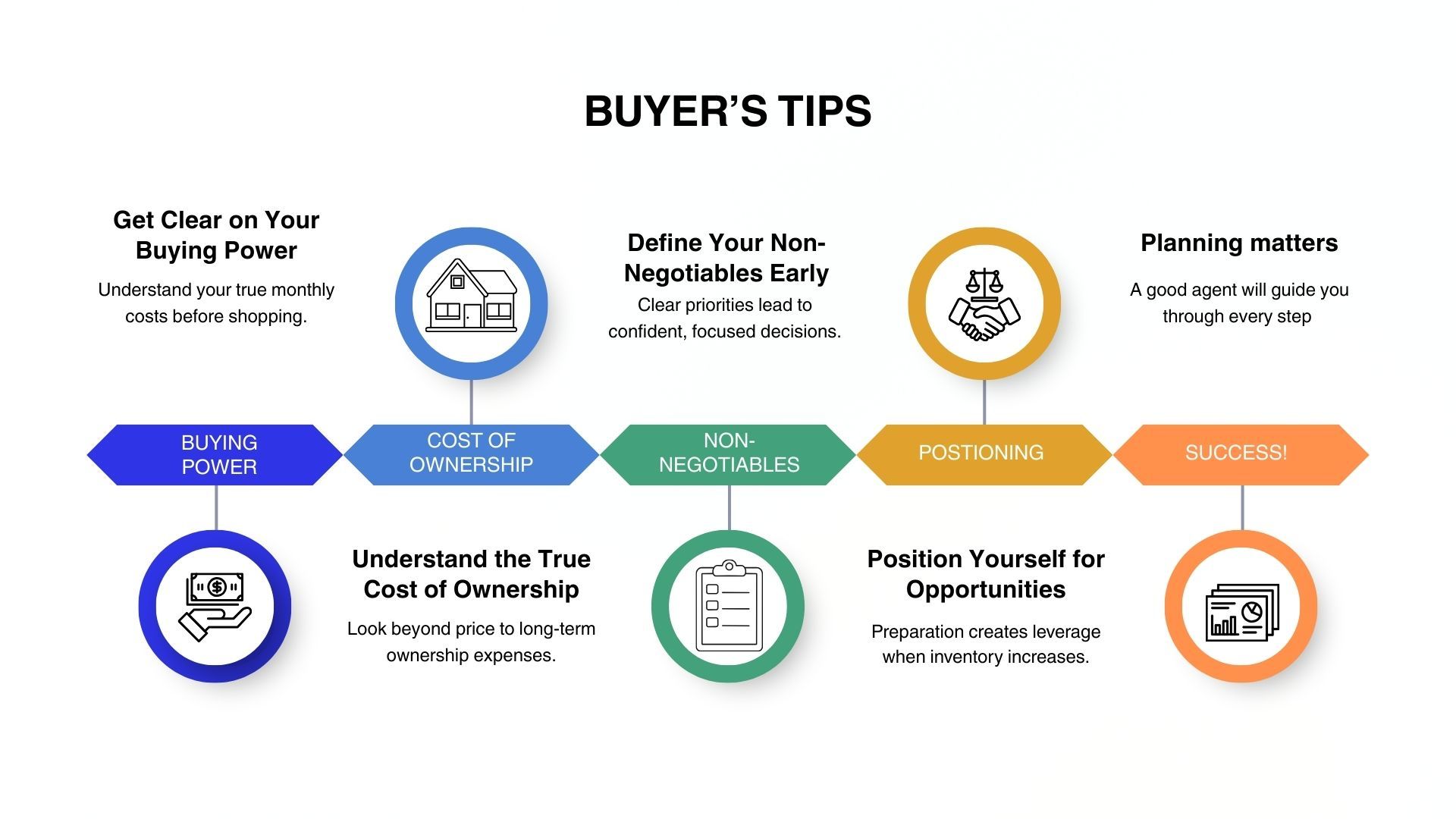
Get Clear on Your Buying Power
Before browsing homes, buyers should understand a comfortable monthly payment, how interest rates impact long-term costs, and how property taxes, MUDs, PIDs, and HOA fees affect affordability. A year-end pre-approval provides clarity and allows buyers to act decisively when the right home becomes available.
Neighborhood selection also plays a major role in affordability and daily life, which we explore further in our Best Places to Live in Houston guide. This step alone often helps buyers avoid stretching beyond what feels comfortable once taxes and community fees are factored in.
Understand the True Cost of Ownership
Houston buyers often focus on purchase price while underestimating ongoing expenses. Property taxes, HOA dues, insurance, maintenance, and long-term upkeep should all be considered early to ensure the home remains a sustainable financial fit after closing.
For a deeper look at how taxes and community fees vary across the metro, our Real Cost of Homeownership in Texas guide breaks down neighborhood-specific expenses and recurring ownership costs, helping buyers avoid surprises before making an offer.
Define Your Non-Negotiables Early
Clarifying priorities such as preferred neighborhoods, commute expectations, school considerations, and whether new construction or resale is the better fit helps buyers stay focused as inventory shifts. Clear non-negotiables reduce hesitation and lead to more confident decisions.
Many buyers find it helpful to compare master-planned communities and suburban options in advance, especially when balancing lifestyle preferences with long-term value.
Position Yourself for Early-Year Opportunities
Many motivated sellers list in the first quarter, and buyers who prepare ahead often benefit from stronger negotiating leverage and fewer rushed choices. Completing key steps before the new year sets the stage for better overall outcomes.
Advice for Sellers
Selling a home successfully is less about perfect timing and more about having a clear, informed strategy. Year-end planning gives sellers control over their timeline and financial expectations.
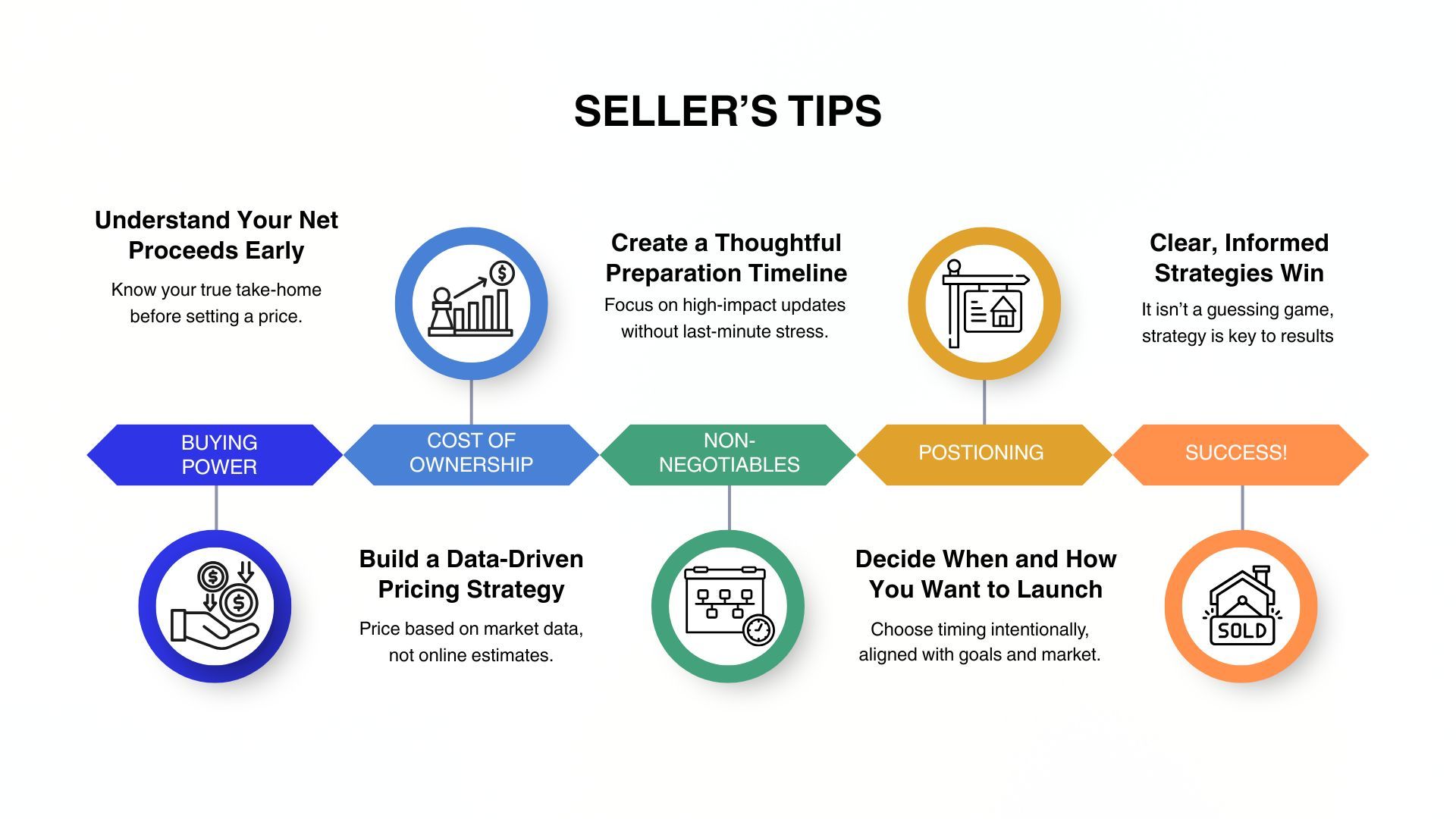
Understand Your Net Proceeds Early
One of the most common seller mistakes is focusing only on list price. Smart sellers take time to understand estimated closing costs, commissions, outstanding HOA fees, and potential preparation expenses so there are no surprises later.
If you’re unsure what sellers typically pay at closing, our Texas Home Selling Costs breakdown outlines common fees and expenses to plan for before listing.
Build a Data-Driven Pricing Strategy
Pricing is not guesswork. Pricing based solely on online estimates often leads to missed opportunities, while pricing informed by recent local data creates stronger momentum from the start by accounting for comparable sales, buyer demand, inventory levels, and seasonal trends heading into the new year.
We regularly analyze pricing trends and buyer behavior across the metro, which help sellers understand how positioning impacts results.
Create a Thoughtful Preparation Timeline
Year-end planning allows sellers to identify which updates truly matter and avoid unnecessary improvements. Spreading preparation over time often leads to stronger presentation and less stress than last-minute changes.
This approach also helps sellers focus on improvements that align with buyer expectations in their specific neighborhood.
Decide When and How You Want to Launch
Some sellers benefit from listing before the new year, while others are better positioned for a Q1 or spring launch. The key is choosing intentionally based on goals, market conditions, and personal timelines, not reacting under pressure.
Thinking Ahead Without Chasing Predictions
Instead of focusing on exact numbers or short-term forecasts, smart planning centers on things you can control:
• Your timeline
• Your financial comfort
• Your equity strategy
• Your long-term lifestyle goals
When those pieces are clear, market noise becomes far less stressful, and decisions become easier to make. And if home maintenance is part of your plan for protecting value this year, bookmark our seasonal Texas home maintenance guide.
Common Year-End Real Estate Questions
Is winter a bad time to buy or sell in Houston?
Not necessarily. While activity may slow slightly, motivated buyers and sellers often benefit from less competition and more focused decision-making.
Should I buy first or sell first?
This depends on financial position, risk tolerance, and market conditions. A personalized strategy is essential.
How early should I start planning a move?
Ideally three to six months before you want to act. Early clarity creates stronger leverage and calmer decisions.
How We Help Clients Plan, Not Just Transact
At Newcomb Realty Group, we don’t believe in pressure or guesswork. Our role is to help clients:
• understand their true options
• map timelines that feel calm and intentional
• avoid unnecessary updates or rushed decisions
• protect equity while planning ahead
Whether your move is months away or still in the idea stage, clarity is always the right first step.
Ready to Start Planning?
A thoughtful real estate plan starts with understanding, not commitment. Whether you’re actively planning a move or simply gathering information, taking time to review your options now helps you enter the new year informed, prepared, and in control.
Let’s talk through your goals and build a strategy that works for you on your timeline.
📞 Book a consultation call: 832-779-5478🌐 Visit our website: www.newcombrealtygroup.com
📲 Connect with us: Instagram | Facebook | TikTok | YouTube | LinkedIn
Categories
- All Blogs (95)
- Conroe (4)
- Cypress (15)
- Dallas-Fort Worth (2)
- Hockley (5)
- Home Ownership Information (37)
- Houston (9)
- Katy/Fulshear (10)
- Magnolia (4)
- Market Forecast (12)
- Memorial (2)
- Neighborhood Information (43)
- New Caney (2)
- Pearland (3)
- Relocation Guide (44)
- Retiree Relocation (3)
- Richmond (5)
- Spring (5)
- Sugarland (2)
- The Woodlands (6)
- Tomball (6)
- Waller (2)
Recent Posts










Realtor® Listing Specialist and Team Lead License ID: 634969
+1(832) 779-5478 | kristina.newcomb@exprealty.com